ALEX'S APPLIED ESSAYS
Ideas to think with, tools to act with.
FACADE BLOG | REFRAME ME

Fairy Tales Understand Transformation Better Than Most Business Frameworks

An applied essay on what old stories know about desire, thresholds, exchange, and change and why business should stop using them as simple marketing and content decorative references.
By Alex DEDIEU
For CURIOUS people who love fairy tales and unexpected implementations.
  • 9-12
    min to read
  • 25
    min to read and explore
  • 30-45
    min to practice
  • 60
    min to apply to a real product
Frameworks organize the journey. Fairy tales expose what must change before a new state becomes possible.

«Сказка — ложь, да в ней намёк, добрым молодцам урок».
A line by Alexander Pushkin, now used almost like a Russian proverb, says,
"A fairy tale may be untrue, but it contains a hint and a lesson for those willing to notice it."

For business and product design, the most interesting word is not lesson but намёк: the hint.

Fairy tales rarely give direct instructions. They reveal something sideways: a hidden rule, an unequal exchange, a threshold that cannot yet be crossed, a helper on whom the hero depends, or a valuable quality the existing world fails to recognize.

Let’s explore what these old fictional worlds can hint at about the very real products, experiences, and businesses we are trying to design.
chapter 1

The fairy-tale workshop trap

Using fairy tales as decorative material without changing the business logic underneath.
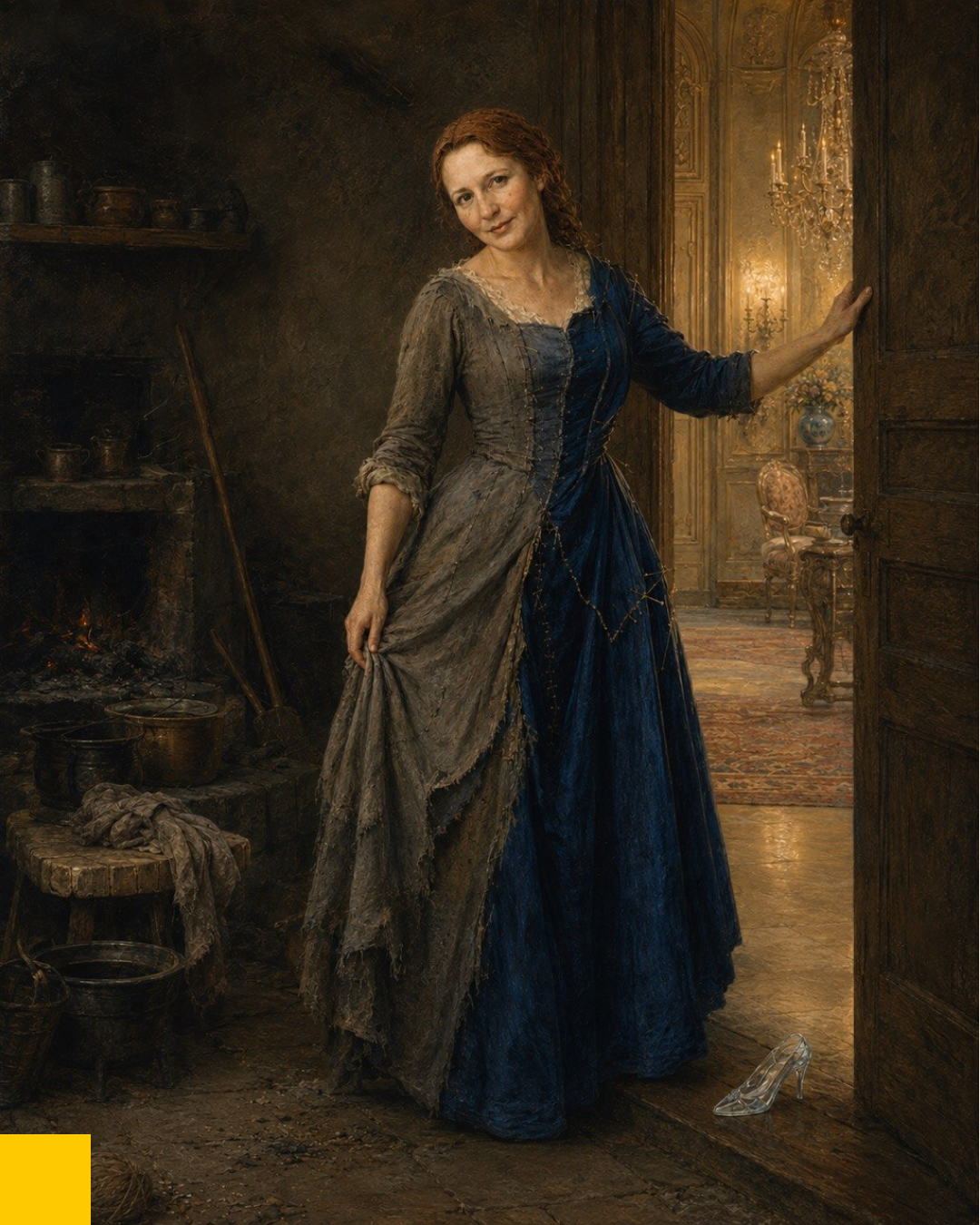
Imagine a business workshop where Cinderella becomes the customer, the ball becomes the market, the fairy godmother becomes the mentor and the glass slipper becomes the offer. It feels creative. The participants smile. The board fills with familiar characters.

But when the costume is removed, the business idea underneath is exactly the same. The customer still travels through a funnel. The mentor still delivers advice. The offer still waits to be chosen. Nothing has been redesigned; the conventional model has simply been dressed for the ball.

This is how business usually invites fairy tales in: through the marketing door. A founder becomes the hero. A competitor becomes the dragon. A product becomes the magic key. The result may be memorable, but the story remains decoration placed over an unchanged system.

The more interesting move is to ignore the costume and examine the machinery underneath.
Why can Cinderella not be recognized in one environment but become visible in another? Why do the Emperor's advisers protect an obvious failure?
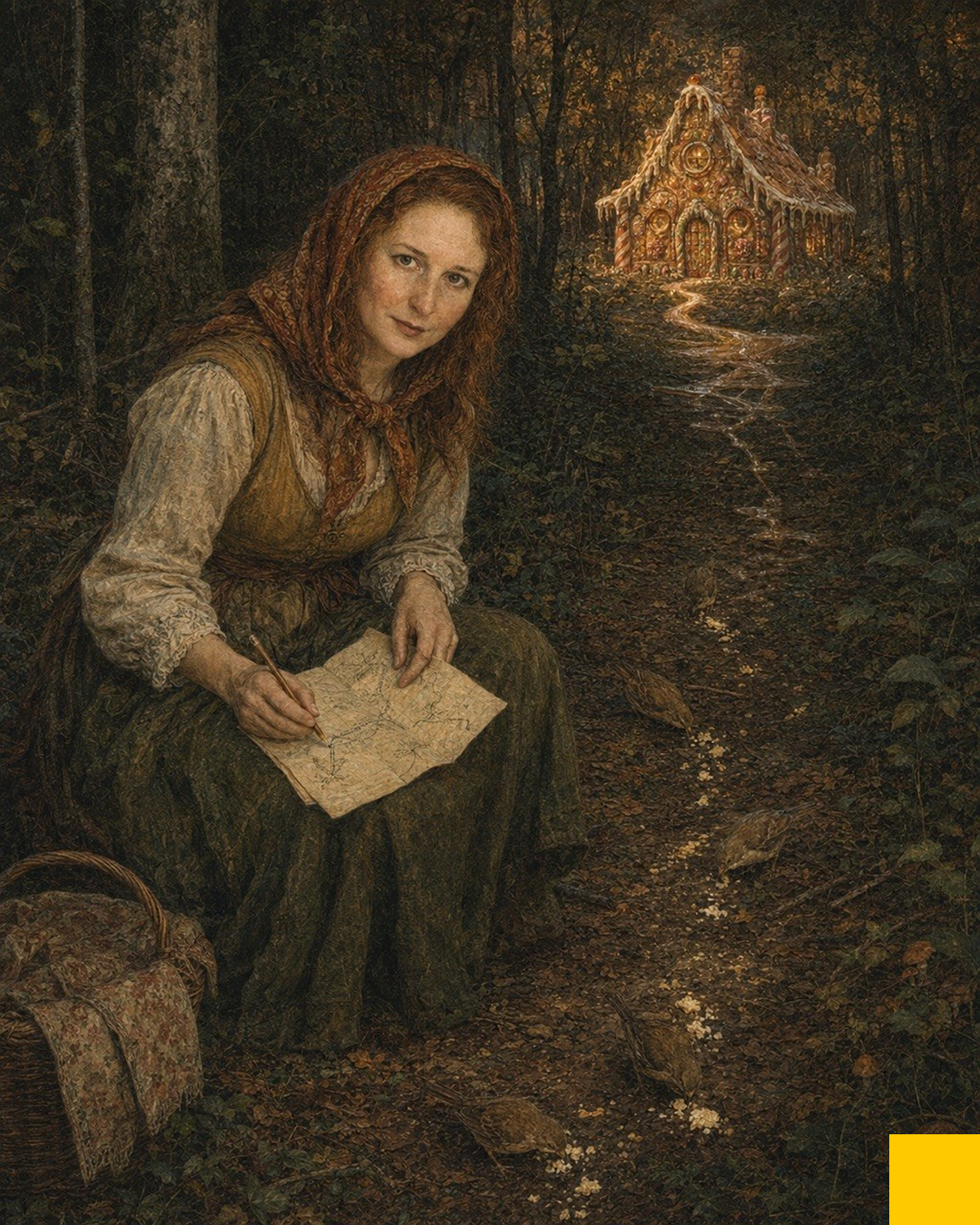
Why does the gingerbread house work precisely because it is attractive?

These are not branding questions. They are questions about systems, incentives, interfaces, trust and transformation.
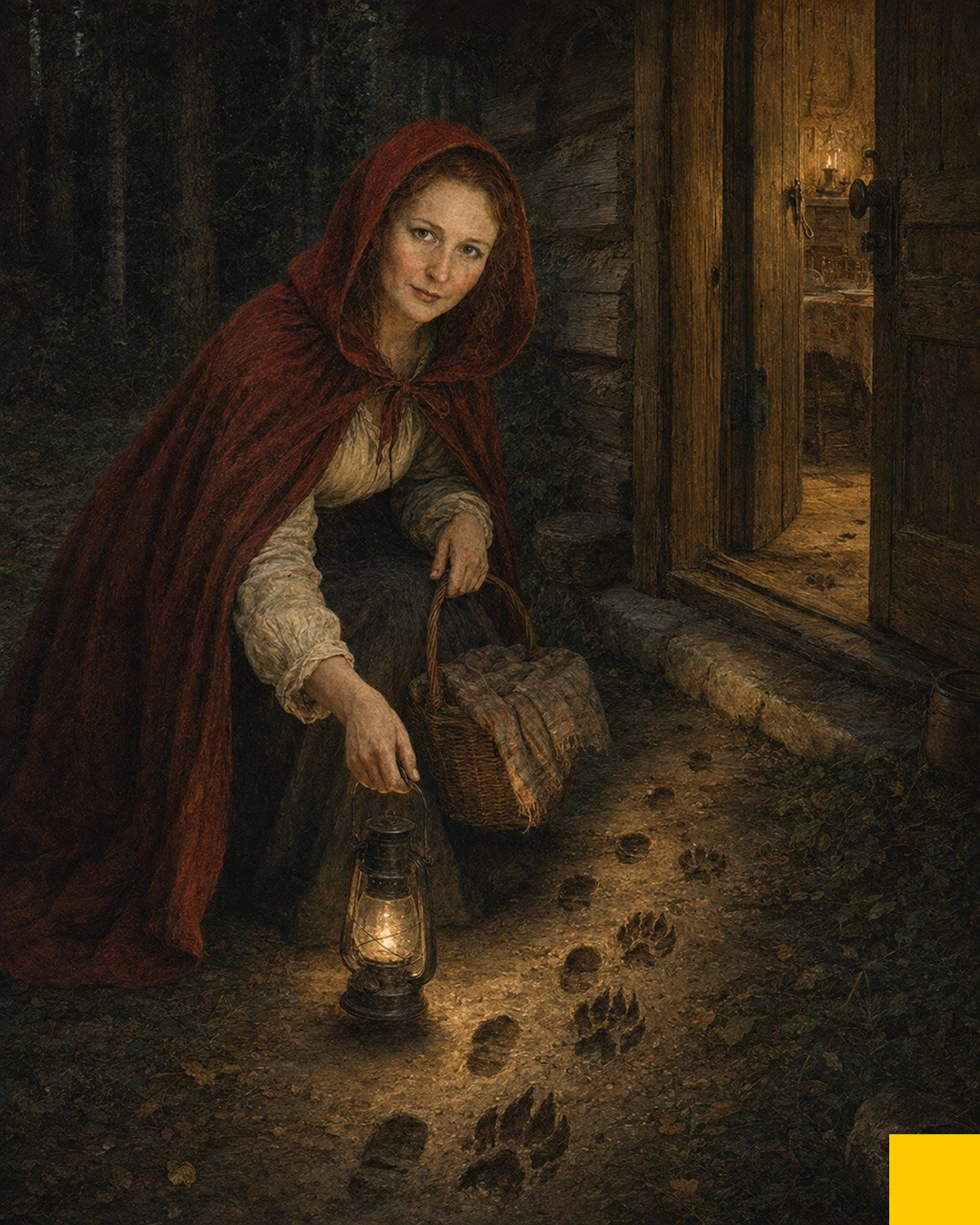
The wolf is not your competitor. The forest is not your market. The relations are the material.
chapter 2

A framework tells you what to do next.
A tale asks what must become different.

Action vs. Transformation
Most business frameworks begin after the world has already been defined. Identify the customer. Map the journey. Prioritise the problem. Test the solution. The steps may be useful, but the framework rarely questions the rules that produced the situation. It organises movement inside the existing box.

A fairy tale begins elsewhere. Someone desires something, but the ordinary world cannot deliver it. The world has rules. A threshold separates one state from another. Helpers, obstacles, and objects redistribute power. Every gift has a condition; every shortcut has a cost. By the end, the protagonist has not merely completed a sequence. Their position, capacity, identity or relationship with the world has changed.

This is why fairy tales can be unexpectedly precise design material. They do not offer a checklist for change. They model the forces that make change necessary, difficult and consequential.
chapter 3

Fairy tales are compressed transformation systems

What's hidden behind fairy tale plots?
Fairy tales are part of oral tradition: stories carried across generations, altered by each teller and shaped by the cultures that preserved them. UNESCO describes oral traditions as vehicles for knowledge, social values and collective memory. Their endurance does not make them timeless or neutral. It makes them culturally dense.

A shoe, a breadcrumb, a mirror, a forbidden room: each object arrives already loaded with expectations. We know that the path matters, that the mirror may reveal more than appearance, that the locked door will eventually be opened. A tale can therefore establish a world, a conflict and a field of consequences with extraordinary economy.

In his study of Russian wonder tales, folklorist Vladimir Propp identified recurring narrative functions beneath very different characters and settings. His model was specific to a corpus and should not be treated as a universal grammar. Yet the design insight remains useful: surfaces vary while relations and transitions can repeat. This is exactly what frameworks attempt to capture; except fairy tales preserve tension, movement, risk and consequence.
Five design elements are hidden inside a tale:
  • 1 - Desire creates direction
    ·A transformation starts because the present state is no longer sufficient.
  • 2 - A rule-bound world creates the system
    The problem is maintained by rules, permissions, habits and distributions of power.
  • 3 - A threshold creates the decision
    Crossing into a new state requires commitment, proof or risk.
  • 4 - An exchange changes the field
    Objects, information, roles and resources move between actors — never without consequence.
  • 5 - Transformation defines value
    The final value is not the object obtained but what the protagonist can now see, do, become or create.
  • Those five provide a practical structure for analyzing a product or business situation.
    Let's see now how to use this material.
chapter 4

Why the material works when a framework gets stuck

Conventional tools flatten assumptions, relationships and consequences.

It creates productive distance.

People can discuss the Emperor's invisible clothes more freely than their director's invisible strategy. The story moves the problem outside the person. This resembles the externalising move used in narrative practice: the problem becomes something that can be examined rather than an identity that must be defended.
Distance lowers resistance without removing seriousness.

It preserves relations.

Analogy becomes useful when we transfer a relational pattern rather than copy a surface. The gingerbread house is not interesting because it is a house made of sweets. It is interesting because an irresistible interface hides a cost from a vulnerable user. That relation can illuminate onboarding, pricing, platform design or a seemingly generous offer with difficult exit conditions

It makes consequences visible.

A framework can isolate one decision from the rest of the system. A tale rarely allows that luxury. Remove the helper, change the rule, give the magic object to someone else — and the effects travel through the entire world. This is why fairy tales are useful for scenario work: they let us disturb one relation and follow the consequences without pretending to predict the future.

It gives transformation a felt shape.

Business language often reduces transformation to an outcome statement: increased confidence, improved visibility, better decision-making. A tale forces us to ask what changed in the person's relation with the world.

Can they enter a room that was previously closed?
Can they recognise a false promise?
Can they act without the helper?

Transformation becomes observable rather than aspirational.
THINKING ACTIVITY FOR A READER
Take a fairy tale you like the most until you do remember one. (Laughing..)
Think about what reminds you of what: what situation from ordinary life can be easily matched with a fairy tale scenario? How are the characters and their roles organized? What and who can be compared with what and who?...
chapter 5

Other disciplines already work with this intelligence

How is a fairy tale used across systems of change?
Business is late to the deeper use of stories.

Psychology and narrative practice use distance, projection and re-authoring to reveal patterns that direct questioning may keep hidden.

Cinema repeatedly adapts fairy tales because a familiar structure can carry new cultural conflicts.

Game design converts rules, thresholds, resources and consequences into actions the player must perform.

Education uses scenarios to make abstract decisions experiential.

Speculative design changes the rules of a possible world so that people can debate the present through its consequences.

Business has borrowed the visible layer — heroes, quests, archetypes and dramatic language. It has barely touched the design intelligence underneath: the way a story distributes agency, stages proof, encodes trust and defines what counts as transformation.
Still there? Let's bring some practice into reflection.
Alex
chapter 6

Cinderella and the invisible expert: a complete business deconstruction

How to connect fairy tale material to design material?
Consider an independent female expert with deep knowledge and a generic offer. Clients who work with her recognise the quality. People encountering her for the first time do not. She responds by polishing the website, posting more often and making the offer prettier. Visibility is treated as a volume problem.
Cinderella suggests another diagnosis. She does not become valuable at midnight. Her capacities existed before the transformation scene. What changes is the context in which those capacities can be recognised. The tale is not primarily about becoming better. It is about becoming legible inside a system of recognition.
THE DESIRE - To be recognized without having to become louder or simpler.
THE RULE-BOUND WORLD - Expertise is judged through familiar titles, formats, social proof and category language.
THE THRESHOLD - A situation in which the expert can be experienced and compared, not merely described.
THE HELPER AND OBJECTS - Temporary access, recognisable signals and artifacts that translate hidden capacity into visible evidence.
THE TRANSFORMATION - The market can now read the expertise, and the expert can reproduce that recognition intentionally.
The resulting design moves are different from post more content. The expert can name a diagnostic method, show how she sees what others miss, create a demonstration moment, turn tacit reasoning into visible artifacts and build language that makes the category readable. The product does not need a prettier dress. It needs better conditions of recognition.
DESIGN PROMPT
Where does the value already exist but remain unreadable because the context, signals or gatekeepers are wrong?
Four more tales, four different design moves
for navigating other recurring problems.
chapter 7

Five ways to use fairy tales in business design

Design techniques (this chapter is intended for designers looking for new tools).

01 Reframe a strategic problem

A tale breaks the tyranny of the first explanation. 'Sales are slow' can become a system of thresholds, gatekeepers, false helpers, missing proofs and costly exchanges.
DESIGN PROMPT
If this problem were a tale, which rule of the world would explain why the protagonist keeps failing?

02 Design a customer journey as a sequence of state changes

What's the alternative to the classic customer journey as a funnel of company touchpoints? Identify the call, threshold, test, helper, exchange, and return. At each stage, specify what the customer can now see, do or believe that was impossible before.
DESIGN PROMPT
Where does the customer need a bridge and where do they need a test?

Create a product mechanism

A memorable intellectual product needs more than content. Translate an object or relation into repeatable action: breadcrumbs become progressive guidance, a mirror becomes diagnostic feedback, and three wishes become constrained prioritization.
DESIGN PROMPT
Which element of the tale could become an action the user performs rather than a metaphor they hear?

Build positioning and category language

A tale can reveal the conflict your category owns. Cinderella concerns legibility; the Emperor exposes collective blindness; Goldilocks stages calibration. A structural conflict produces sharper language than another list of benefits.
DESIGN PROMPT
Which familiar story makes your audience recognise the situation before you explain the solution?

Prototype futures with a team

Tales let teams explore consequences without pretending to predict. Remove the helper, reverse a rule, change the price of the object or give it to another actor. Follow the effects through roles, resources, trust and decisions.
DESIGN PROMPT
What happens to the system if the helper disappears or the forbidden door opens?

The Tale-to-Tool framework

The value of the exercise depends on the return. If the metaphor does not produce a design decision, the session remains charming and useless. A practical translation can happen in five moves:
  1. Name the real situation. Write one decision, journey or product problem; not a broad topic such as visibility, trust or growth.
  2. Choose by conflict. Select a tale because its structural tension resembles the situation, not because its imagery is attractive.
  3. Map the machinery. Identify desire, rules, threshold, helpers, obstacles, exchanges, objects and the final transformation.
  4. Disturb one relation. Remove a helper, reverse a rule, change the cost, transfer the object or let another actor cross the threshold.
  5. Extract one design move. Convert the new relation into a feature, ritual, message, proof, experiment or strategic choice.
The tale is not the answer. It is a device for making the hidden system visible so that you can redesign it.
chapter 8

The cultural code is part of the method and part of the risk

Challenging cultural and business assumptions.
Fairy tales are not neutral templates. Every version carries assumptions about gender, labour, authority, family, deserving, punishment and success. Cinderella does not encode the same relationship with agency as a Baba Yaga tale. A helper in one tradition may become a dangerous negotiator in another. Even the same story can reward obedience in one retelling and resourcefulness in another.

This is not a reason to avoid the material. It is precisely why the material is valuable. The cultural rule becomes visible enough to question. Keep the pattern, challenge the moral, change the winner, redistribute the object and test the resulting design against real people and evidence.

The transformation question business keeps skipping

Two approaches, two different question angles.

A framework usually asks: What steps will move the user toward the outcome?
A fairy tale asks a more uncomfortable question: What must change in the world, the relations or the person before the new state becomes possible?

That question matters for intellectual products. Information can be delivered without changing capacity. A service can produce a result that disappears when the expert leaves. A course can be completed without altering the decisions a person is able to make. Real transformation is not the quantity of content consumed. It is the difference between what someone could do before and what they can now do without the magic helper.

This is where fairy tales understand transformation better than many business frameworks. They do not confuse arrival with change. They make us look for the threshold, the exchange, the proof and the new capacity. Then they insist on consequences.
NEXT EXPLORATION to be continued
12 Fairy Tales for Business
This article is the beginning of a working library: familiar fairy tale stories structures translated into business conflicts, design prompts, strategic moves and product mechanisms. Not a collection of morals in business clothes, but a practical way to choose the right tale for a real situation and return with something that can be designed, tested and used.
If this exploration has found you a bit reframed, share with me your findings.
I am always curious to see what it may become in the other's minds. -;)

Yours, Alex D.
You are welcome to reuse, quote, or share any content from this blog.
Please credit Alex Dedieu | BoldCorner and include a link to the original article or the homepage.
Alex Dedieu
Author, Category Designer Enthusiast & Founder Bold Corner
Discuss with Alex
MORE SMART READS TO GO, more applications
    Question in mind? Idea to discuss?
    Ask it now; I reply fast.