There is a romantic version of the title of this series. I know the first publication is a kind of a trial; I experiment with a format.
Art sees first because artists are unusually sensitive creatures who somehow feel what is coming before everybody else. I like the romance of it. I just don’t think we need it.
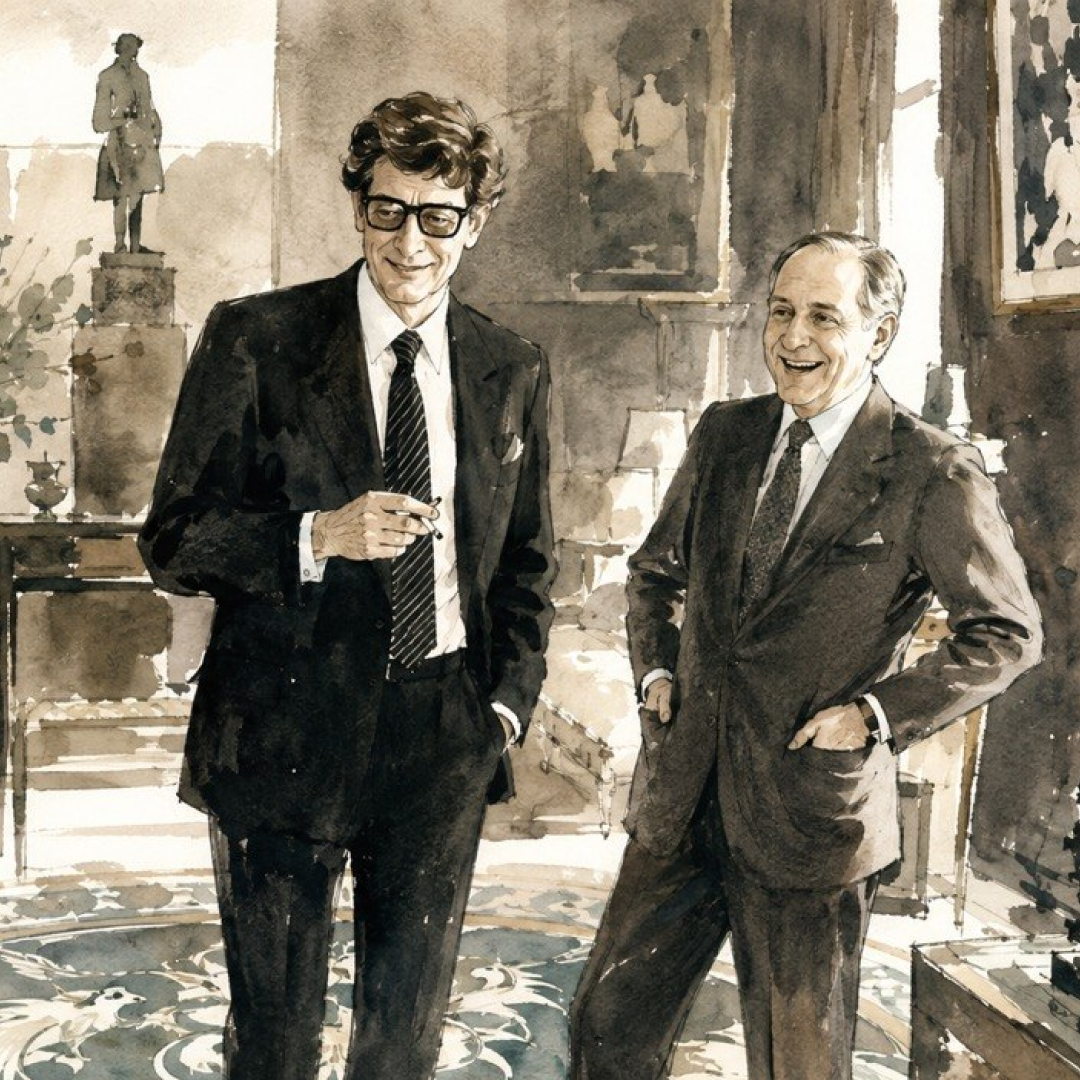
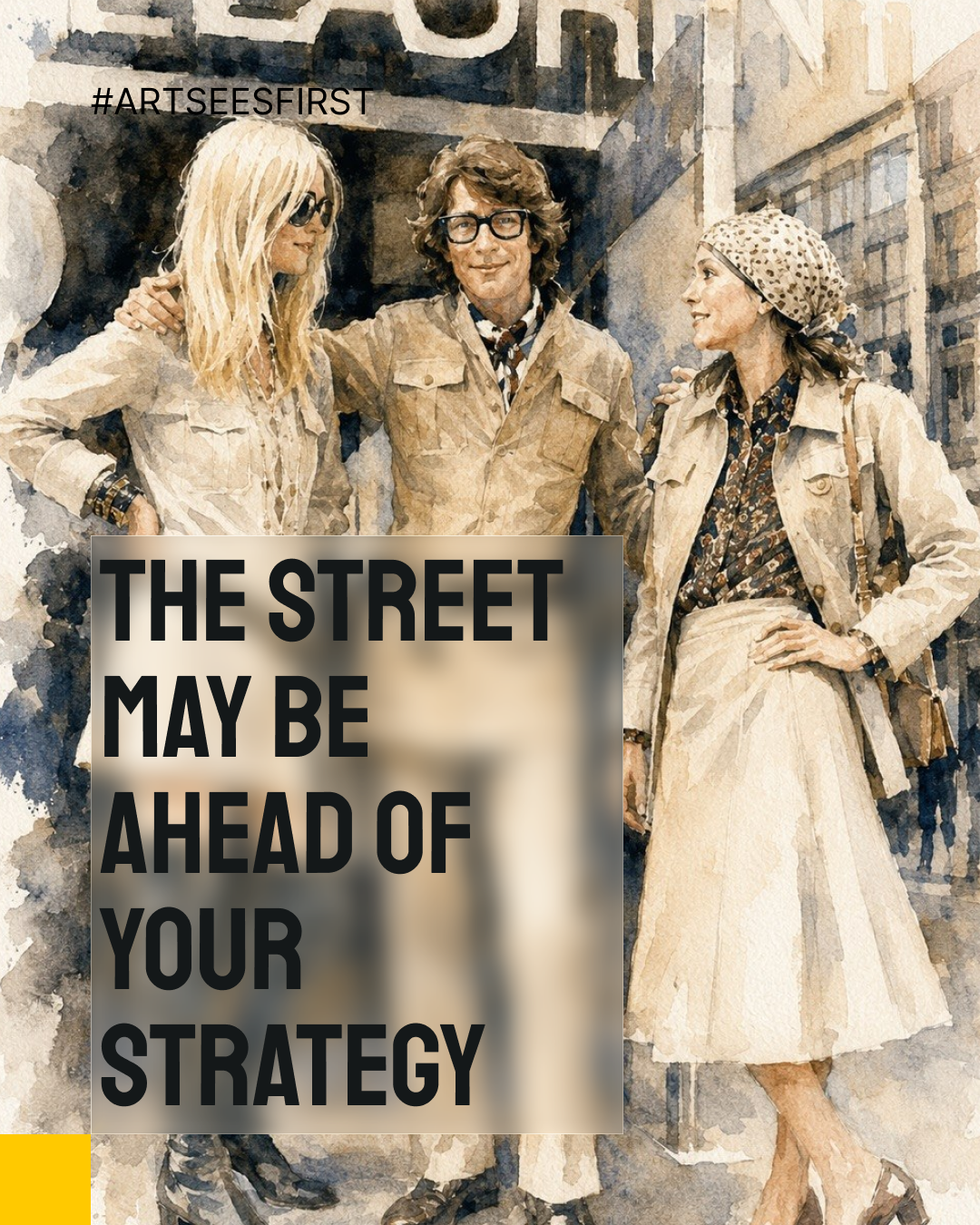
Saint Laurent did not have to predict that women’s lives were changing. They were already changing. He did not invent Paloma Picasso’s flea-market experiments. He saw them. He did not create the tension between masculine and feminine codes.
He found a way to make that tension visible. His way. That is enough.
A forecast tries to tell us what will happen later. Art can take something that is already happening now but is still scattered and difficult to read and increase its resolution.
One unusual single behaviour is easy to ignore. A collection, film, novel, photograph or song can concentrate the same tension until it becomes something we can look at. Once it has a form, we can disagree with it. We can reject it, desire it, laugh at it, imitate it, become offended by it. But before any of those reactions, somebody has made it visible.
Business operates under a different constraint. If I am investing money, hiring people or manufacturing thousands of goods, I would quite
like evidence that more than three eccentric people want the thing. So business asks sensible questions. How large is the market? How fast is it growing? Is the behaviour repeatable? Can we measure demand?
Art is allowed to have a lower threshold of suspicion. A filmmaker can become preoccupied with a behaviour she has only seen a handful of times. A novelist can spend years inside a contradiction for which society has not produced a label. A photographer can point the camera at people nobody considers a segment. Most of these observations will not become “the future.”
That is fine. Looking early necessarily produces false positives.
What interests me is the timing difference. By the time something is established enough to become a trend, somebody has already been doing it. By the time a new professional category has a name, people have usually been working inside it for years. By the time a new learning behaviour appears in research, learners have already been inventing strange workarounds around the old system. The report does valuable work. It validates and organizes what is happening. But it usually arrives after the first signs.
Art often leaves us material from the awkward period before the pattern becomes easy to defend. That is why I would not replace research with art. I would use them at different moments.
Data becomes powerful once we know what we are trying to measure. Art can be useful while we are still working out what might deserve our attention. And this feels particularly relevant now.
We have become extraordinarily good at generation. I can generate twenty product directions, fifty names, several visual worlds, and a pile of frameworks before lunch. The number of possible ideas is no longer the problem it once was. So the question moves upstream.
What did you notice?What behaviour is still too small to appear on a strategy slide? What does your existing framework keep throwing away as noise? Where are people improvising because the official solution does not fit? What contradiction are they simply living with while we keep trying to “solve” it?
Professional systems have a habit of treating anomalies as mistakes.
A customer uses the product incorrectly, so we improve onboarding.
Learners skip the content, so we work on completion rates.
People combine two offers we intended to keep separate, so we clarify the architecture.
A professional does not fit a category, so we tell them to specialize.
Sometimes the system is right. But sometimes the anomaly contains better information than the system.
Perhaps the customer has found a better use. Perhaps completion is not the right measure of learning. Perhaps two services belong together because the actual problem refuses to respect our categories. Perhaps the professional identity looks incoherent because the job description was built for work that is disappearing.
I don’t think the answer is to celebrate every anomaly. That simply replaces one dogma with another. I want to leave it unresolved for slightly longer.
Art is good at that. A novel does not have to turn a contradiction into recommendations at the end of the chapter. A film can show behaviour without giving us five actions to take on Monday morning. A fashion collection can exaggerate a code simply to see what happens when people encounter it.
Professional thinking is often less patient. We name. Categorise. Build the quadrant. Extract the framework. At some point the framework becomes so convenient that we begin seeing reality through it instead of using it to see reality more clearly.
Which brings me back to the material that started this whole article. I could have kept the ten business lessons from Yves Saint Laurent.
- Break the rules.
- Know your audience.
- Find your signature.
- Take inspiration from other disciplines.
They are not false. They are simply the least specific things we can say about what happened.
- “Break the rules” removes the particular rule.
- “Know your audience” removes the woman running through the metro and the Bourse.
- “Find your signature” removes decades of repetition, revision, and accumulated choices.
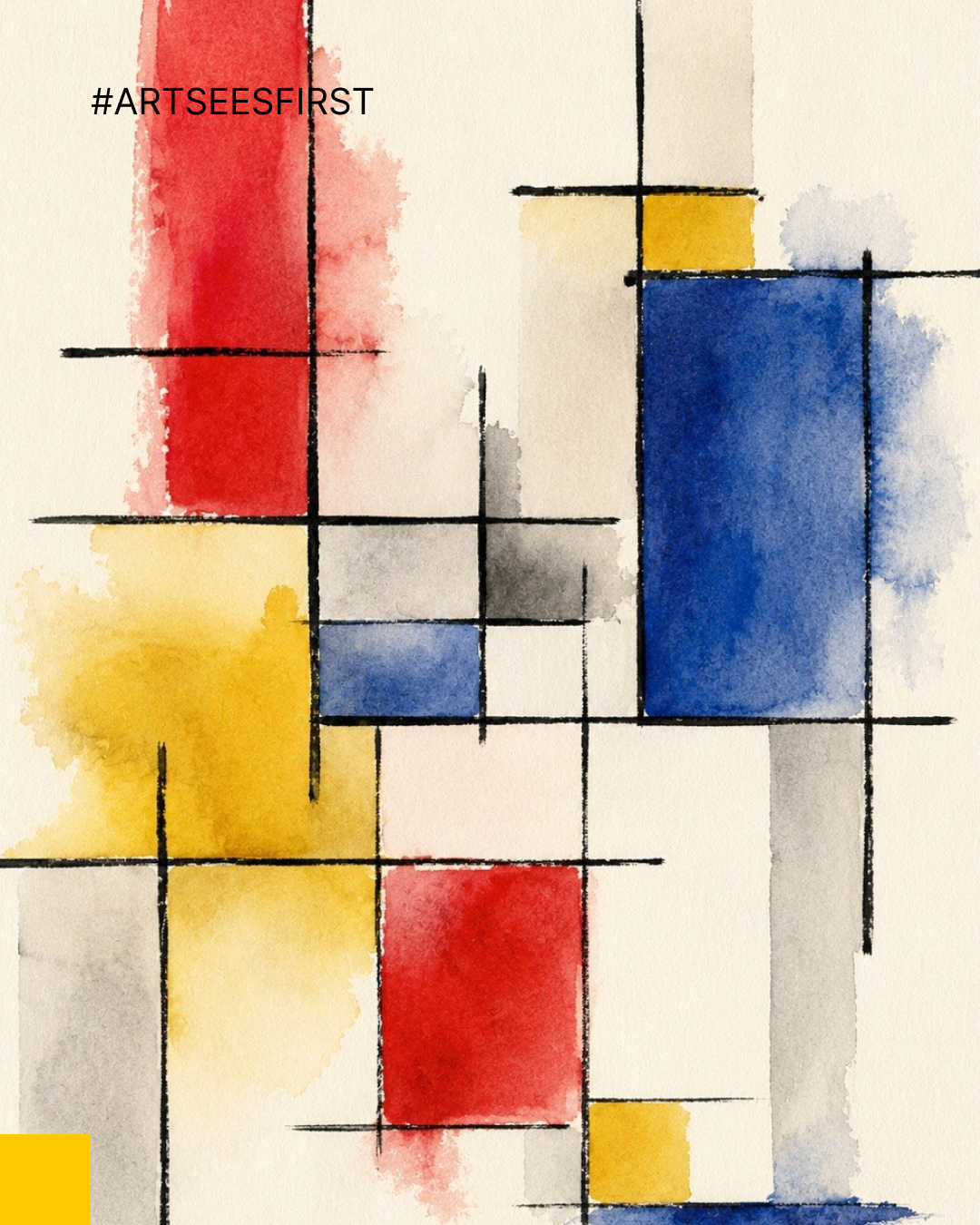
- “Take inspiration from art” removes the problem of getting Mondrian off a flat canvas and onto a body that moves.
The more portable we make the lesson, the more of the original case we throw away. And perhaps that is exactly the material worth keeping.
I want to stay with the particular case for a little longer and ask what operation is happening there. What existed before? What actually moved? What remained intact? What changed meaning?
Then I can try the move somewhere else. A fashion collection from 1966 will not tell me what product to launch next year. But it can make me notice that
ownership is a design variable. Mondrian will not design a learning experience for me. But the journey from canvas to garment can show me what real translation between disciplines asks of us.
Paloma Picasso cannot tell me which weak signal deserves attention in my field. But she can remind me where to look: among behaviours that are still too small, too awkward or too incorrect to have a respectable category.
That is what I mean by
Art Sees First. Not that art knows first. Knowing comes later.
Someone notices something. Someone gives it a form. Other people react to it. The signal grows, mutates or disappears. Researchers measure it. Business organizes around it. Eventually somebody finds a name. And by then it often feels as though it had always been obvious.
Art leaves us traces from before it was obvious.
I think we should learn to read them.