
Reading time: 3 min.
Sometimes a monetization shift starts with something that does not look economic at all. A formatting choice. A method. A way of structuring work differently. Change the system, and you may discover that you have also changed what the market can recognize, count, and pay for.
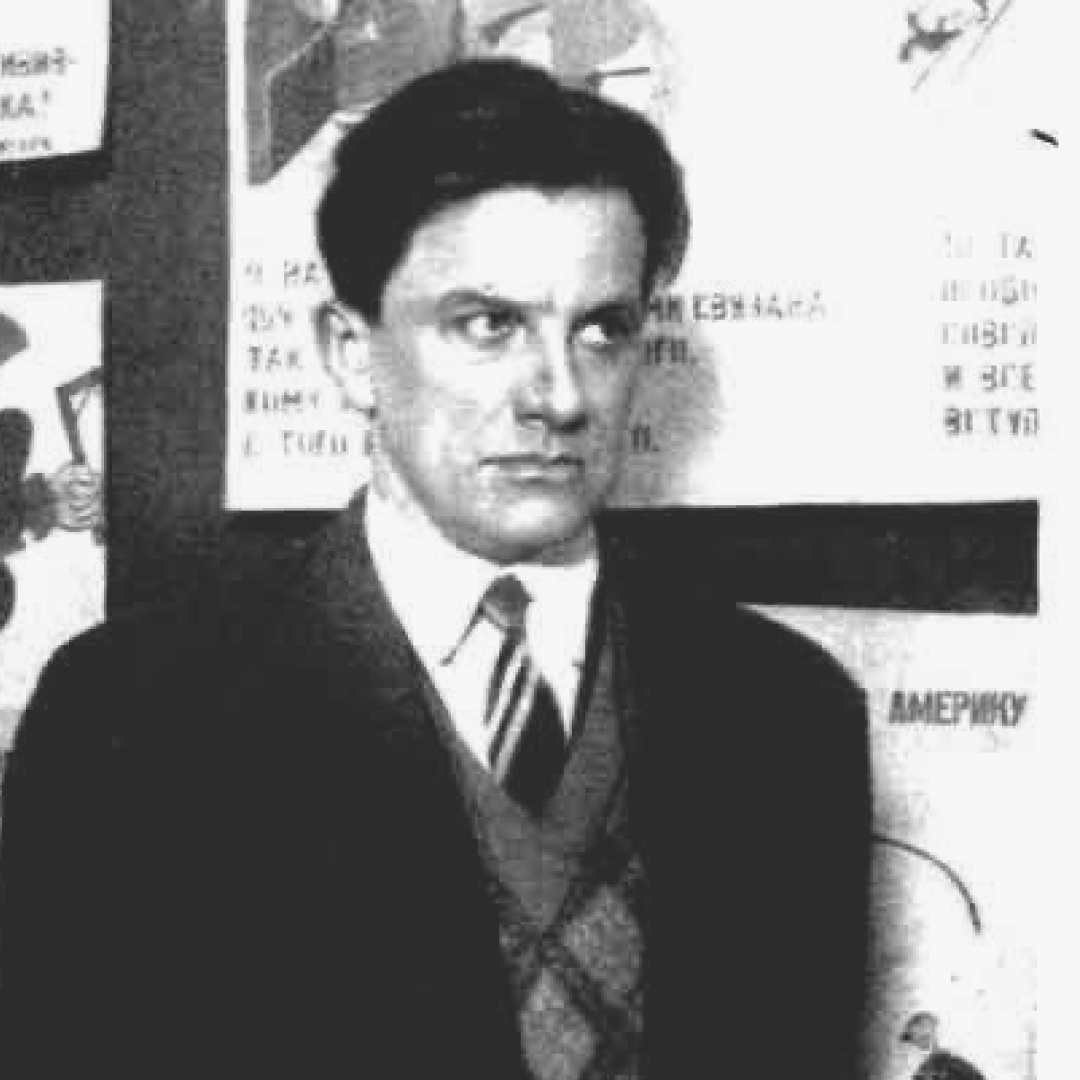
Vladimir Mayakovsky, A Russian poet in the beginning of the 20th century did something deceptively simple to poetry: he changed the line.
Instead of arranging a sentence across a conventional verse as one continuous line, he broke it into a staircase — the famous лесенка, or “ladder”, using space to control rhythm and the way the poem should be read aloud. A few words, then a drop. Another phrase pushed further to the right. Another below it. The page itself began to carry rhythm.
Mayakovsky defended the form as functional. It helped him change pauses, emphasis and intonation, almost like leaving performance instructions inside the poem. The ladder was not a decoration added after the writing. It was part of the writing system.
A proprietary system often begins this way. Someone repeatedly encounters a limitation in the existing format and invents a structure that works better for the way they think or work. At first it may look like a personal habit. Then it becomes recognizable. Eventually you can see the author in the structure before you even read the name.
Mayakovsky’s ladder did exactly that. It turned formatting into unmistakably his — a visual and structural signature.
Mayakovsky’s ladder did exactly that. It turned formatting into unmistakably his — a visual and structural signature.
He was accused of gaming the system.
But the ladder also produced an unintended second economic effect. At the time, publications paid poets by the number of lines. A conventional line split into two or three visual lines could therefore count differently and suddenly be counted as two or three. Mayakovsky’s contemporaries noticed quickly enough. He was accused of using his ladder to inflate his fees, an accusation he answered with characteristic irony. The format had been created for poetry, but it interacted with the business model as well.
This is what makes the story worth noticing beyond literature. A proprietary system rarely changes only the way something looks or works. Once you introduce your own structure, you may also change what the product is made of, what can be counted, and ultimately what can be sold.
Whether money motivated the form is almost beside the point. The more useful observation is that once he changed the system, he also changed the unit the market was counting.
This is what makes the story worth noticing beyond literature. A proprietary system rarely changes only the way something looks or works. Once you introduce your own structure, you may also change what the product is made of, what can be counted, and ultimately what can be sold.
Whether money motivated the form is almost beside the point. The more useful observation is that once he changed the system, he also changed the unit the market was counting.
That is something we often miss when designing products around one's expertise and experience.
We tend to separate methodology from business value and monetization logic. First we create the method; later we decide how much to charge for it. But a sufficiently distinctive system can alter the economics from inside.
We tend to separate methodology from business value and monetization logic. First we create the method; later we decide how much to charge for it. But a sufficiently distinctive system can alter the economics from inside.
Experts often start monetisation from the opposite end. They take what already exists — an hour, a consultation, a course, a report. Then they ask how much to charge for it. But those units are inherited conventions. They are the equivalent of the traditional poetic line. As long as the architecture stays the same, pricing has very little room to become a variable.
An expert selling time has hours as the unit.
A proprietary system creates another possibility.
Turn the expertise into a diagnostic, and the unit becomes an assessment. Structure it as a repeatable method and you can sell a structured decision process rather than a conversation. Add tools, facilitation protocols, or certification, and entirely different forms of value appear. The knowledge underneath may not have changed dramatically. What changes is the unit through which its value becomes visible.
What changed is the unit through which its value becomes visible and experience countable.
This is why proprietary systems matter beyond differentiation. We do not simply attach the monetisation to a finished product in order to make it easier to recognize. It's partly designed inside the product architecture itself. When the structure becomes proprietary, new ways of delivering, repeating, scaling, and charging often appear with it.
Mayakovsky did not merely write poems in a distinctive shape. He created a form with its own logic, and the surrounding economic system reacted to it.
For anyone building from expertise and experience, there is a useful question hidden in that story:
What is the “line” in what you currently do and what becomes possible if you redesign it?
The unit you inherited from your industry — the hour, session, page, course, deliverable — may not be the only possible way to structure what you create. A new monetization model begins much earlier than pricing. It begins when you redesign the unit itself.
Perhaps your next monetization opportunity is not another offer to invent. It may already be sitting inside the way you work: a recurring structure, a peculiar sequence, a tool you keep recreating, a way of seeing the problem that clients come to you for. Something so familiar that you no longer recognize it as an asset.
The useful work is simply to look at your expertise from a different perspective to find Mayakovsky's line variable and stop treating it as incidental.
That is exactly the kind of territory I like to explore in a Focus Lab: not starting with What could you sell?, but looking for where monetization may already be hidden in the architecture of your work.
The useful work is simply to look at your expertise from a different perspective to find Mayakovsky's line variable and stop treating it as incidental.
That is exactly the kind of territory I like to explore in a Focus Lab: not starting with What could you sell?, but looking for where monetization may already be hidden in the architecture of your work.
Yours, Alex