

Reading time: 3-4 min
A client said something to me this week:
“We often talk about thinking outside the box. But there is more to that.”
At first sight, my initial reply was "Exactly," but I stopped. “Outside the box” assumes there is one box and our job is simply to escape it.

Box in the Valise, Marcel Duchamp, 1935
That made me reflect. "Outside the box” remains too binary for what people do. I started turning this idea around. What happens when we change our position in relation to this box?
Inside the box → we try to understand the existing logic
Outside the box → we challenge its assumptions
Around the box → we look through other disciplines, perspectives, angles
Between boxes → we connect things normally kept separate
Rebuild the box → tu turn those connections into a different product/system
Sometimes the most valuable move is not getting outside the box at all. It’s realizing we’ve been solving the wrong box.
Inside, I felt something was still missing out. So I dig deeper here what's behind my box.
The expression "thinking out of the box" is usually linked to the nine-dot puzzle: nine dots arranged in a 3×3 grid must be connected with four straight lines without lifting the pen. The trick is that the lines have to extend beyond the imaginary square formed by the dots. Versions of the puzzle existed by the early 1900s, while the “outside the box” formulation became especially associated with management and creativity discourse in the 1970s–80s.
Here, we already have something revealing in the original puzzle: there is no actual box. We mentally create it. The constraint is partly assumed rather than given. That made the metaphor powerful: creativity meant questioning invisible assumptions.
But I think there are at least four things wrong with what the metaphor became that tremendously affects the way people perceive creativity and its value.
1. It turns creativity into an excursion.
You have the box. It could be anything: normal work, normal thinking, or normal practice.
Then a workshop tells you to leave it. You brainstorm. You use six hats, Lego, cards, and AI prompts and lateral-thinking exercises. For two hours everybody becomes “creative.”
And Monday morning? Back into the box.
That is exactly the weakness you spotted. A lot of learning produces temporary cognitive tourism rather than expanded capability. The unusual method stays external to the person's normal operating system.
Your alternative is fundamentally different:
Then a workshop tells you to leave it. You brainstorm. You use six hats, Lego, cards, and AI prompts and lateral-thinking exercises. For two hours everybody becomes “creative.”
And Monday morning? Back into the box.
That is exactly the weakness you spotted. A lot of learning produces temporary cognitive tourism rather than expanded capability. The unusual method stays external to the person's normal operating system.
Your alternative is fundamentally different:
Don’t leave the box. Make the box larger.
This new perspective becomes useful as it changes what you are subsequently capable of seeing, combining, or doing.
2. “Outside” falsely implies that constraints are the enemy of creativity.
Research doesn't support such a simple opposition. A 2022 meta-analysis found that constraints can actually support creativity under certain conditions rather than merely suppress it.
The goal is not to create constraints leading to freedom. The logic is a little bit different here:
current constraints → understand them → challenge some → introduce new possibilities → create a richer design space.
So instead of escaping the system, we increase the number of moves possible within it. That's much closer to design.
The goal is not to create constraints leading to freedom. The logic is a little bit different here:
current constraints → understand them → challenge some → introduce new possibilities → create a richer design space.
So instead of escaping the system, we increase the number of moves possible within it. That's much closer to design.
3. It makes “different” sound inherently valuable.
Once outside the box became business language, it gradually acquired this weird assumption.
Familiar becomes boring. Unexpected is perceived as creative.
Therefore, "unexpected" sounds much better. By the way, I got used to always starting my interventions under the "expect the unexpected" umbrella.
Familiar becomes boring. Unexpected is perceived as creative.
Therefore, "unexpected" sounds much better. By the way, I got used to always starting my interventions under the "expect the unexpected" umbrella.
To pursue my logic, a bizarre solution outside the existing system may be useless.
A small connection to another discipline may completely transform what the existing system can do.
Innovation research often describes novelty through recombination of existing concepts, rather than magical creation from nowhere. Work on technological innovation, for instance, studies innovation as combinations and expansions of existing conceptual spaces.
It implies that you don't necessarily need to go outside your box, whatever it is: expertise, job, product, project.
You can bring something into it. See the examples:
Psychology enters product design and marketing. To sell something, we need to understand how this someone thinks and behaves and what makes him finally buy.
Game mechanics enter education and projects. We call this gamification. We gamify the system to stimulate engagement and interactions inside a system.
Cinema enters strategy and independent activity promotion. We borrow quotes and stories from films and tricks and techniques to catch attention and to find a differentiation point.
Anthropology enters branding. We unlock rituals, traditions that bring meanings people adhere to.
The original box hasn't been abandoned. Its vocabulary has expanded.
A small connection to another discipline may completely transform what the existing system can do.
Innovation research often describes novelty through recombination of existing concepts, rather than magical creation from nowhere. Work on technological innovation, for instance, studies innovation as combinations and expansions of existing conceptual spaces.
It implies that you don't necessarily need to go outside your box, whatever it is: expertise, job, product, project.
You can bring something into it. See the examples:
Psychology enters product design and marketing. To sell something, we need to understand how this someone thinks and behaves and what makes him finally buy.
Game mechanics enter education and projects. We call this gamification. We gamify the system to stimulate engagement and interactions inside a system.
Cinema enters strategy and independent activity promotion. We borrow quotes and stories from films and tricks and techniques to catch attention and to find a differentiation point.
Anthropology enters branding. We unlock rituals, traditions that bring meanings people adhere to.
The original box hasn't been abandoned. Its vocabulary has expanded.
4. The metaphor itself has only two states: inside / outside.
I see here the conceptual weakness: it's binary. Real intellectual development is everything except binary.
There are degrees of expansion. Let's take an example and imagine expertise as a territory:
Box 1: What I already know and habitually do.
Box 2: New tools and practices I can use.
Box 3: Other disciplines whose logic I can borrow.
Box 4: New relationships I can now perceive.
Box 5: New things I can create because those relationships exist.
That is not thinking outside the box. It is increasing your possible world.
We find a fascinating neighboring concept here: Stuart Kauffman's adjacent possible, later popularized in innovation writing by Steven Johnson. Innovation often happens not by jumping into an unlimited universe, but by opening the next set of possibilities made accessible by what already exists. Johnson describes good ideas as developing through networks, recombination, and adjacent possibilities rather than isolated eureka moments.
Box 1: What I already know and habitually do.
Box 2: New tools and practices I can use.
Box 3: Other disciplines whose logic I can borrow.
Box 4: New relationships I can now perceive.
Box 5: New things I can create because those relationships exist.
That is not thinking outside the box. It is increasing your possible world.
We find a fascinating neighboring concept here: Stuart Kauffman's adjacent possible, later popularized in innovation writing by Steven Johnson. Innovation often happens not by jumping into an unlimited universe, but by opening the next set of possibilities made accessible by what already exists. Johnson describes good ideas as developing through networks, recombination, and adjacent possibilities rather than isolated eureka moments.
Thinking outside the box gives you an idea.
Expanding the box gives you a new way of thinking.
There is another point with “thinking outside the box” I want to develop. It asks us to move into unfamiliar territory. And unfamiliar territory is not equally attractive to everyone.
Our brains can be curious about novelty while remaining cautious about uncertainty. Some people naturally go hunting there. They explore, improvise, make strange connections, and tolerate not knowing where they are going. We tend to call them creatives, innovators, rebels, and outsiders. But when creativity is framed as leaving the box, we quietly design the whole idea around those who are already comfortable leaving it.
Expanding the box proposes something different. You don't have to abandon what you know. You start there, move towards something adjacent, explore it, connect it to existing knowledge, and gradually incorporate it. What was unfamiliar becomes usable. What was outside becomes part of your territory.
This is also where many courses and creativity workshops fall short. They take us outside for a few hours: a new framework, an unusual exercise, a different way of looking at a problem. Then the workshop ends, and we return to our usual environment, habits, and ways of thinking. We visited somewhere new, but our territory remained exactly the same.
A lot of education and training gives people content from outside their current box while leaving the architecture of the box untouched.
Our brains can be curious about novelty while remaining cautious about uncertainty. Some people naturally go hunting there. They explore, improvise, make strange connections, and tolerate not knowing where they are going. We tend to call them creatives, innovators, rebels, and outsiders. But when creativity is framed as leaving the box, we quietly design the whole idea around those who are already comfortable leaving it.
Expanding the box proposes something different. You don't have to abandon what you know. You start there, move towards something adjacent, explore it, connect it to existing knowledge, and gradually incorporate it. What was unfamiliar becomes usable. What was outside becomes part of your territory.
This is also where many courses and creativity workshops fall short. They take us outside for a few hours: a new framework, an unusual exercise, a different way of looking at a problem. Then the workshop ends, and we return to our usual environment, habits, and ways of thinking. We visited somewhere new, but our territory remained exactly the same.
A lot of education and training gives people content from outside their current box while leaving the architecture of the box untouched.
Actual learning logic:
Learn a framework. → Apply the framework. → Finish the course or training program. → Return to your habitual way of seeing.
I am much more interested in making that return impossible in order to make it actionable in the mid- and long term. After psychology, systems thinking, storytelling, game design, anthropology, or AI has genuinely entered your way of reasoning (it does not matter how far outside the box you have traveled), the old box no longer exists. The new perspective has entered it. Your box has been expanded. There are more connections, more possible moves, more things we can see from where we stand.
I am thinking out loud right now; maybe the purpose of learning isn't to teach us how to think outside the box. It is to make sure we can no longer fit inside the old one.
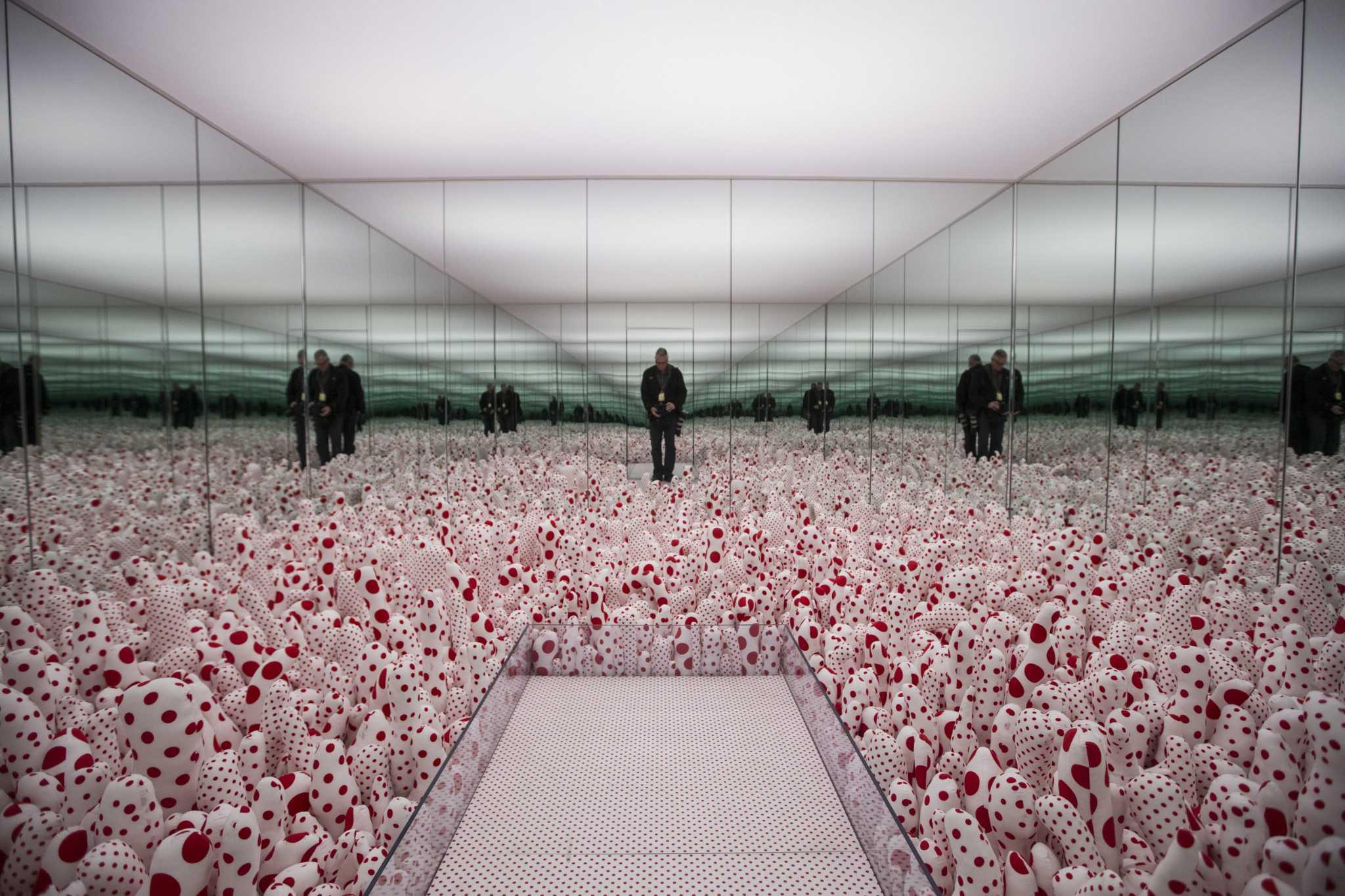
Writing this reflection made me question, once again, how I position what I do. Perhaps my work is less about helping people think differently (if it happens in the process) and more about expanding the territory from which they can think : bringing in unfamiliar perspectives, disciplines, methods, and connections until they become part of their own way of seeing and acting.
Thinking outside the box favors the hunters. Expanding the box teaches everyone to explore.
I don’t want to make people think outside the box. I want the outside to become part of their box.
Thinking outside the box favors the hunters. Expanding the box teaches everyone to explore.
I don’t want to make people think outside the box. I want the outside to become part of their box.
Yours, Alex
Credits:
[Re]thinking outside the box: a meta-analysis of constraints and creative performance
Eureka Moments are very, very rare. Steven Johnson
Illustration, Box in the Valise, Marcel Duchamp, 1935